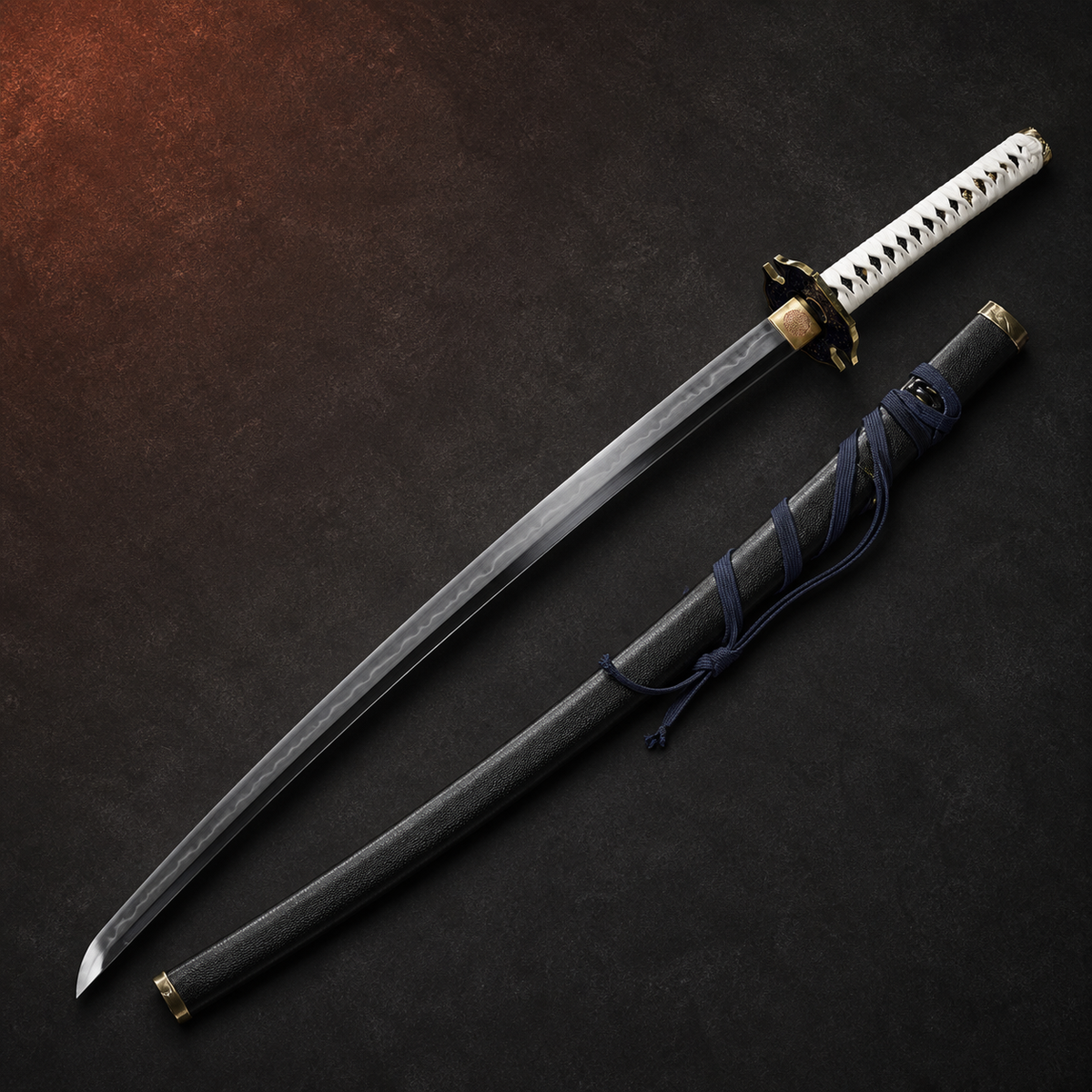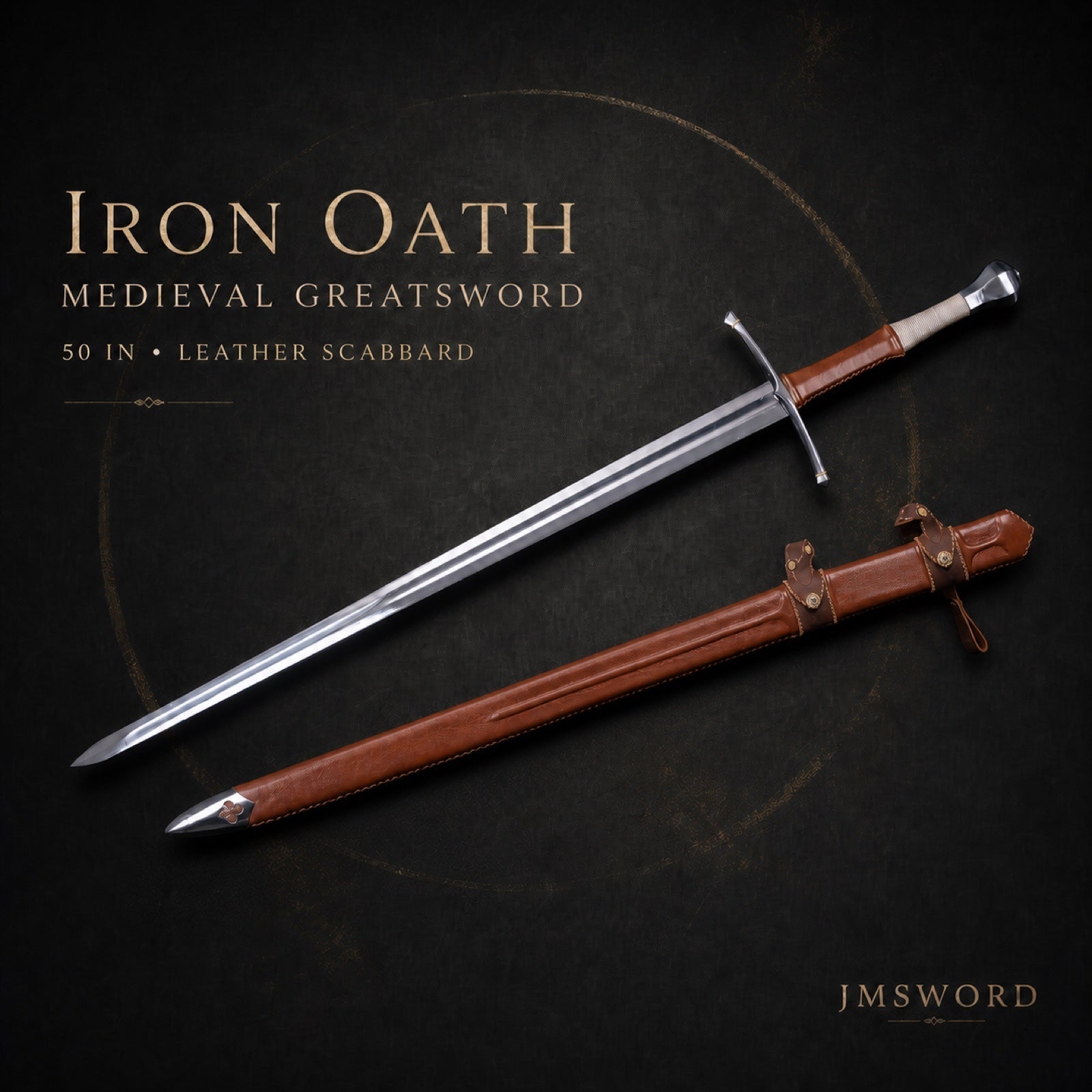

Many sword listings offer a choice between sharpened and unsharpened configurations. The difference sounds simple, but it affects storage, handling, gifting, shipping and the way the sword fits into a collection. The better choice depends on the exact product and your lawful purpose—not on the assumption that a sharper edge automatically makes a sword more authentic or valuable.
This guide compares both options for collectors and explains the questions to answer before ordering.
What is a sharpened sword?
A sharpened sword has a formed cutting edge. The degree of sharpness can vary by maker and model, so terms such as “sharp,” “razor sharp” and “factory sharpened” should not be treated as standardized measurements. Any sharpened steel blade can cause serious injury and demands secure storage and deliberate handling.
Sharpening can also change the final edge geometry and finish. If the appearance of the bevel matters to you, review close-up photographs and ask whether sharpening is performed before or after the final surface treatment.
What is an unsharpened sword?
An unsharpened sword has an edge that has not been finished as a cutting edge. It might be deliberately blunt, left with a thicker edge or supplied before final sharpening. “Unsharpened” does not mean harmless. The point, guard and rigid steel edge can still injure someone, and the sword still requires controlled handling and secure storage.
An unsharpened collector sword is also not automatically suitable for martial-arts training, sparring, stage combat or cosplay. Those activities require purpose-built equipment, appropriate edge and point geometry, protective gear, qualified instruction and rules specific to the activity.
Quick comparison
| Consideration | Sharpened | Unsharpened |
|---|---|---|
| Display appearance | May show a finished cutting bevel | Can preserve a thicker edge profile |
| Handling risk | Higher because the edge can cut | Lower edge risk, but still not safe to handle casually |
| Storage | Requires secure, edge-aware storage | Still requires secure storage and access control |
| Gift suitability | Only when the recipient understands ownership and storage responsibilities | Often the more conservative choice, subject to the same legal checks |
| Training | Not for unsupervised practice | Not training-safe unless the model is specifically designed and approved for that purpose |
When collectors choose a sharpened sword
Some collectors want the sword in the maker’s complete edge configuration, especially when the finished bevel is part of the visual design. A sharpened option may also appeal to experienced owners who already have suitable storage, maintenance habits and a lawful, controlled reason for choosing it.
Before selecting the option, confirm that you can store the sword so the edge cannot be touched accidentally. Wall mounts should retain the sword securely, cabinets should limit unauthorized access and the scabbard should be kept clean and dry.
When collectors choose an unsharpened sword
An unsharpened configuration is often the more practical starting point for display, photography or a collection kept in a household with other people. It can reduce one category of risk while preserving the sword’s overall silhouette, materials and craftsmanship.
It may also be the more appropriate gift when the recipient has requested a display piece. Even then, the buyer should confirm the recipient’s age, local rules and ability to store it responsibly. Never surprise someone with a sword when you do not know whether they can legally receive and safely secure it.
Five questions to answer before choosing
1. What does the product page mean by “unsharpened”?
Ask whether the edge is blunt, rounded or simply left before final sharpening. The word alone does not describe edge thickness or point treatment. Do not assume the configuration is suitable for contact practice.
2. Is the sharpening option available for this exact model?
Options vary by product and destination. Review the product selector and written specifications rather than assuming that every sword is supplied the same way. If the listing is unclear, contact JMSWORD before ordering.
3. Where will the sword be stored?
A sharpened sword should not be left on an open stand where a visitor can touch it. An unsharpened sword also needs secure storage because weight, point and rigid edges remain hazardous. Keep either configuration away from children and unauthorized users.
4. What rules apply at the destination?
Laws and carrier policies can distinguish between sword types, lengths, edge conditions and intended uses. Requirements also change, so buyers must check current local ownership, import, transport and age rules before placing an order.
5. Are you prepared for maintenance?
Both configurations require care. Carbon and spring steels should be kept dry and protected from fingerprints and humidity. A sharpened edge deserves extra attention because careless wiping can cause injury. Follow the steps in How to Clean and Store a Carbon Steel Sword.
Does sharpening change the value of a sword?
There is no universal answer. On a modern made-to-order sword, a maker-provided sharpening option may simply be one available configuration. On an antique, signed or historically important blade, later sharpening or polishing can permanently alter geometry, surface features and collector value. Never apply modern sharpening advice to an antique sword.
For a new sword, value depends on the complete product: materials, heat treatment, geometry, assembly, finish, condition and documentation. A sharp edge does not compensate for missing specifications or poor construction.
Can an unsharpened sword be sharpened later?
Possibly, but not every edge was designed for later sharpening, and an inexperienced attempt can damage the bevel, coating or heat-treated surface. Power tools can remove material rapidly and overheat the edge. If you want a sharp configuration, ordering the maker-provided option is usually more predictable than modifying the sword later.
If you already own an unsharpened sword, ask the manufacturer whether that exact model is intended to be sharpened and use a qualified professional where lawful. Do not experiment on a valuable, coated or patterned blade.
Responsible ownership checklist
- Confirm the selected edge option before checkout.
- Check current laws, age limits and carrier restrictions for the destination.
- Plan secure storage before the sword arrives.
- Keep the blade sheathed or otherwise protected during storage and lawful transport.
- Do not treat “unsharpened” as “safe for sparring.”
- Do not handle either configuration around bystanders, children or animals.
- Use careful maintenance methods appropriate to the steel and finish.
Final takeaway
Choose a sharpened sword only when the edge is relevant to your collecting purpose and you are prepared for the additional storage and handling responsibility. Choose an unsharpened sword when display, photography or a more conservative household setup is the priority. In both cases, verify the exact configuration and treat the sword as a serious steel object.
Browse current models in the medieval sword collection and tactical sword collection, then review the JMSWORD Sword Guide before ordering.