
Longsword, bastard sword and greatsword are useful shopping terms, but they are not three perfectly separated historical boxes. Their meanings changed across languages and periods, and modern retailers sometimes apply them differently. The safest way to compare products is to use the name as a starting point, then check the grip, blade and overall measurements.
This guide explains the practical differences a collector will usually see in today’s medieval-style sword market.
Quick comparison
| Sword type | Typical modern description | Grip emphasis | Collector consideration |
|---|---|---|---|
| Longsword | Long straight blade with a two-hand-capable hilt | Usually two hands | Classic proportions and strong display presence |
| Bastard sword | Hand-and-a-half form between compact one-handed and larger two-handed designs | Extended grip | More compact footprint with a transitional silhouette |
| Greatsword | Oversized two-handed sword with greater overall length and visual scale | Clearly two handed | Needs more storage, display clearance and stronger mounting hardware |
These are broad tendencies, not universal dimension rules. Always compare the listed measurements of the exact sword.
What is a longsword?
In modern collecting language, a longsword usually has a straight double-edged blade, cruciform guard, substantial pommel and a grip long enough for two hands. The proportions distinguish it from a compact one-handed arming sword, even when both share a similar European outline.
Longswords vary considerably. Some are relatively compact hand-and-a-half forms, while others approach the scale that retailers call greatswords. A product title alone cannot tell you the usable grip length, balance or display footprint.
The Aurantia Longsword, for example, is listed at 49.6 inches overall with a 36.3-inch blade. Those measurements communicate far more than the word “longsword” by itself.
What is a bastard sword?
“Bastard sword” is commonly used today for a hand-and-a-half sword: a form with a grip longer than that of a typical one-handed sword but often more compact than a large two-handed longsword. Historical terminology was less standardized, so the category overlaps with “longsword” in many books, museums and shops.
For an online buyer, the most useful clue is the relationship between grip length, blade length and overall weight. A bastard sword can offer the visual language of a two-hand-capable European hilt without requiring the same display space as a very large sword.
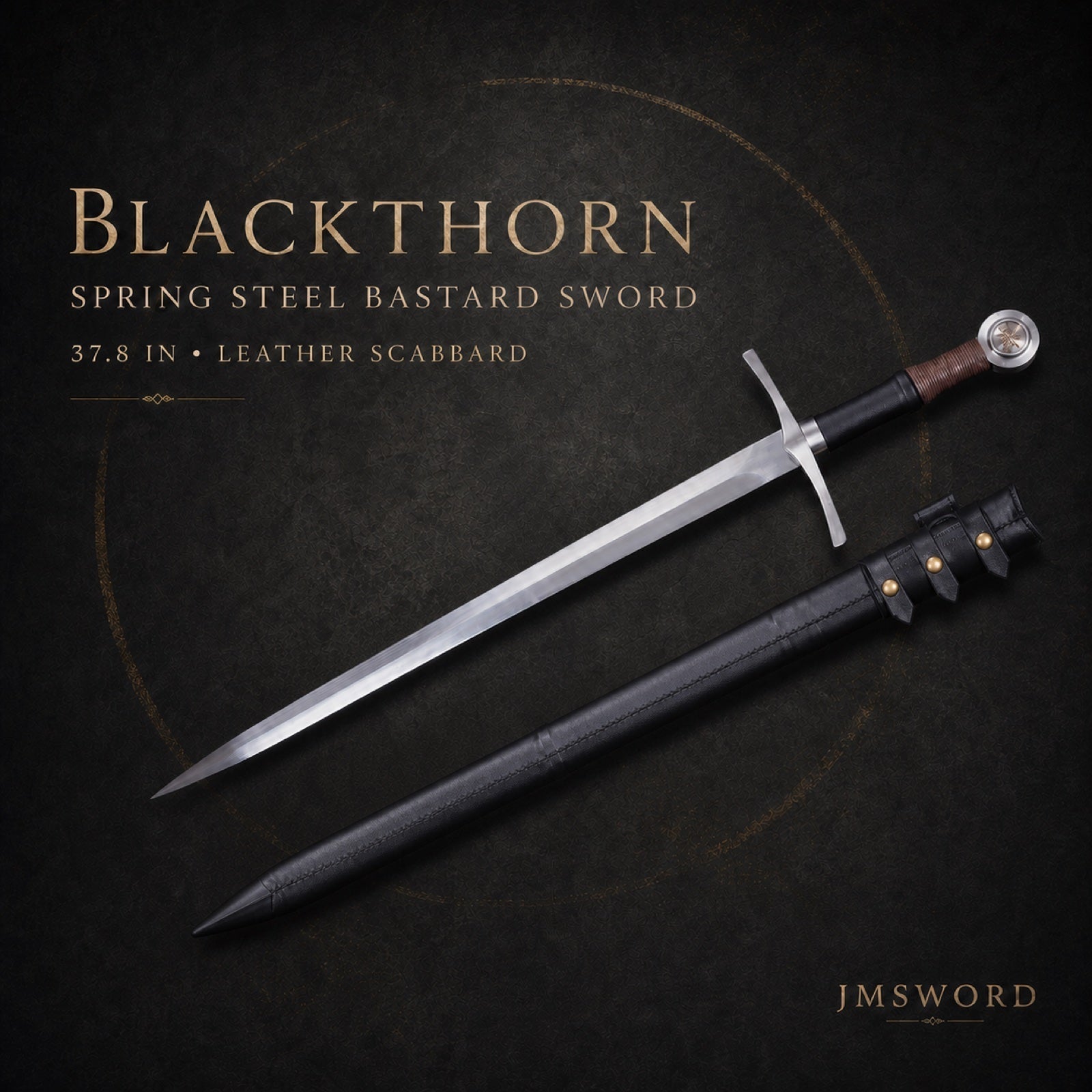
The Blackthorn Bastard Sword is listed at 37.8 inches overall with a 25.2-inch blade. Compare those numbers with the Aurantia Longsword to see how two medieval-style products can occupy very different size categories.
What is a greatsword?
A greatsword is a larger two-handed form. Modern examples often use a longer blade and grip, a wider guard and a more imposing overall silhouette. Historical greatswords include several regional traditions, and not every oversized two-handed sword should be treated as the same design.
From a collector’s perspective, the immediate differences are practical. A greatsword requires more wall or cabinet clearance, may exceed the limits of standard display hardware and creates more leverage when being moved. Its scabbard and fittings also add to the total storage footprint.
The Iron Oath Greatsword measures 50 inches overall. Before choosing a sword of this scale, mark the dimensions on the intended wall or floor space rather than estimating from a product photo.
Why the categories overlap
Modern English names combine historical scholarship, popular culture and retail convention. “Longsword” can be an umbrella term in one context and a specific two-handed category in another. “Bastard sword” may be treated as a synonym for hand-and-a-half sword, while “greatsword” may refer broadly to several large Renaissance and late-medieval forms.
That overlap is not a reason to ignore the names. It is a reason to pair the name with measurable details:
- overall length;
- blade length and width;
- usable grip length;
- guard width;
- weight, with or without the scabbard;
- point of balance, when provided;
- steel, fittings and scabbard materials.
How grip length changes the appearance
A longer grip shifts the visual proportion of the hilt and gives the pommel more separation from the guard. This can make two blades of similar length look very different. Grip length also affects the dimensions of a display stand or storage case.
Do not assume that the full handle measurement equals usable grip area. A listing might include the pommel or other fittings in that figure. Review photographs and ask the seller how the dimension was taken if the difference matters to your display plan.
How to choose among the three
Choose by available space
Measure first. Add clearance beyond the published overall length so the tip and pommel do not touch surrounding furniture, doors or display frames. Greatswords generally need the most room, while a compact bastard sword may suit a smaller cabinet.
Choose by the silhouette you prefer
A longsword offers the most familiar two-handed medieval profile. A bastard sword emphasizes a transitional hand-and-a-half appearance. A greatsword makes size and visual impact central to the display.
Choose by complete specifications
Heavier does not automatically mean better, and a longer blade does not automatically indicate greater quality. Consider the steel, finish, construction, fittings, scabbard and stated measurements together. Read How to Choose the Right Sword Length, Weight and Balance before relying on category labels.
Choose with ownership requirements in mind
Confirm local age, possession, transport and import rules. Plan secure storage away from children and unauthorized handling. If a sharpening option is offered, decide whether it is appropriate for your lawful collecting purpose and storage environment.
Buyer checklist
- Does the product page provide both overall and blade length?
- Is the grip measurement clear?
- Is weight stated, and does it include the scabbard?
- Will the sword and scabbard fit the intended display?
- Are steel, guard, grip and scabbard materials identified?
- Have you checked local rules and selected secure mounting hardware?
Final takeaway
Longsword, bastard sword and greatsword describe overlapping families. In current retail use, the main differences usually appear in grip length, overall scale and the intended visual proportion. Use the name to narrow your search, then let exact measurements decide whether the sword suits your collection.
Browse the full JMSWORD medieval sword collection and use the Sword Guide to compare materials, dimensions and responsible ownership information.