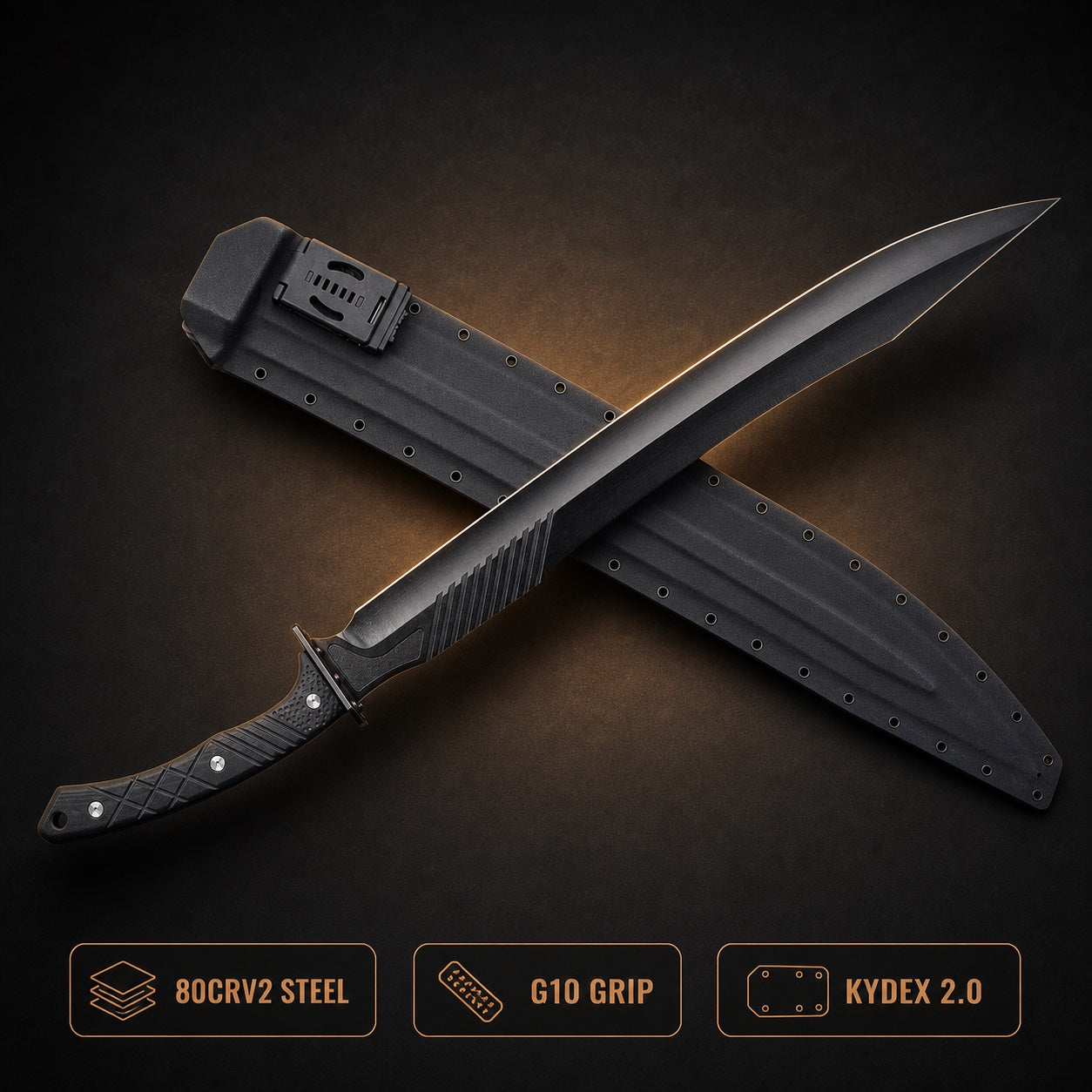

Sword photographs can make two very different sizes look nearly identical. Before ordering, compare the published measurements instead of judging scale from the image alone. Total length, blade length, grip length, weight and balance all affect how a sword fits a display, case or collection.
This guide explains the measurements that matter and how to compare them without relying on vague labels such as “full size” or “battle ready.”
Start with the five essential specifications
1. Overall length
Overall length is measured from the tip to the end of the pommel or handle. It tells you how much physical space the sword occupies. Add clearance around that number when planning a wall mount, cabinet or shipping-safe storage case.
2. Blade length
Blade length helps define the sword’s visual proportion. Two swords with the same overall length may look very different if one has a longer grip or larger pommel. When comparing listings, check whether blade length is measured from the tip to the guard or uses another reference point.
3. Grip length
Grip length is a useful clue to the intended historical form. A one-handed arming sword generally has a shorter grip, while a longsword or greatsword may provide room for two hands. Decorative pommel length should not be confused with usable grip area.
4. Weight
Weight affects display hardware, shipping, storage and the overall impression of the piece. A heavier sword is not automatically stronger or more authentic. Good design distributes material according to the blade’s geometry and intended profile.
5. Point of balance
The point of balance describes where the sword balances relative to the guard. A balance point closer to the hand can make a sword feel different from one with more mass toward the blade. Published balance measurements are useful, but they should be interpreted together with total weight, blade length and profile.
Understanding common size categories
Names such as short sword, arming sword, longsword, bastard sword and greatsword describe families rather than strict universal dimensions. Historical examples varied, and modern reproductions vary as well.
- Short sword: compact overall proportions and easier display in limited space.
- Arming sword: traditionally a one-handed European form with a compact grip.
- Bastard sword: commonly used for swords with a hand-and-a-half style grip.
- Longsword: generally a two-handed European form with a longer grip and blade.
- Greatsword: a larger two-handed form with substantial display presence.
For example, compare the 37.8-inch Blackthorn Bastard Sword with the 50-inch Iron Oath Greatsword. Both belong to the medieval collection, but they demand different display space and create a different visual scale.
How to choose a sword for display
Measure the intended location before purchasing. For horizontal wall display, allow space beyond the tip and pommel so the sword does not touch surrounding furniture or doorways. For vertical display, check ceiling height and leave clearance for safe placement and removal.
- Use mounts rated for more than the sword’s listed weight.
- Support the sword at stable points without pressing against the edge.
- Avoid direct sunlight, high humidity and HVAC condensation.
- Keep sharpened items secured and inaccessible to children.
- Store the scabbard without forcing the blade against interior debris or moisture.
How grip and guard shape change the footprint
A wide crossguard may require more shelf depth than expected. Large pommels and flared grips also affect case dimensions. Modern tactical designs can have belt attachments or molded scabbard hardware that add width even when the blade itself is narrow.
Review all product images, especially photographs showing the sword and scabbard together. The tactical sword collection includes several compact and full-length formats, while the medieval sword collection ranges from one-handed-inspired pieces to large longswords and greatswords.
Do not choose by weight alone
Online buyers sometimes assume that a heavier sword represents higher quality. In reality, excess mass can simply result from thick geometry or oversized fittings. Historical-inspired proportions, distal taper, blade width and pommel construction all influence the final number.
For collecting purposes, focus on whether the published measurements suit your space and the type of piece you want. If two products use different measuring conventions, ask for clarification before treating the numbers as directly comparable.
A practical pre-purchase checklist
- Confirm overall length and blade length.
- Check weight and whether it includes the scabbard.
- Review usable grip length and guard width.
- Confirm whether a scabbard, sheath or display accessory is included.
- Decide whether you need sharpened or unsharpened configuration where offered.
- Measure the intended display or storage location.
- Review local ownership, shipping and import rules before purchase.
Final takeaway
The right sword size is the one that fits your collection, storage plan and preferred visual proportions. Product names are helpful, but exact measurements are more reliable. Start with total length and weight, then compare blade, grip, guard and scabbard dimensions before making your choice.
Use the JMSWORD Sword Guide for more buying information and browse the current medieval and tactical collections.