
“Tactical sword” and “medieval sword” describe two very different design directions. One emphasizes modern materials, low-maintenance fittings and contemporary profiles; the other draws from European historical forms such as the longsword, bastard sword, Viking sword and greatsword. Neither category is automatically better. The right choice depends on what you want to collect, display and maintain.
This guide compares the two categories through practical details—blade profile, steel, grip, scabbard, dimensions and overall visual character—so you can make a more informed decision.
What defines a tactical sword?
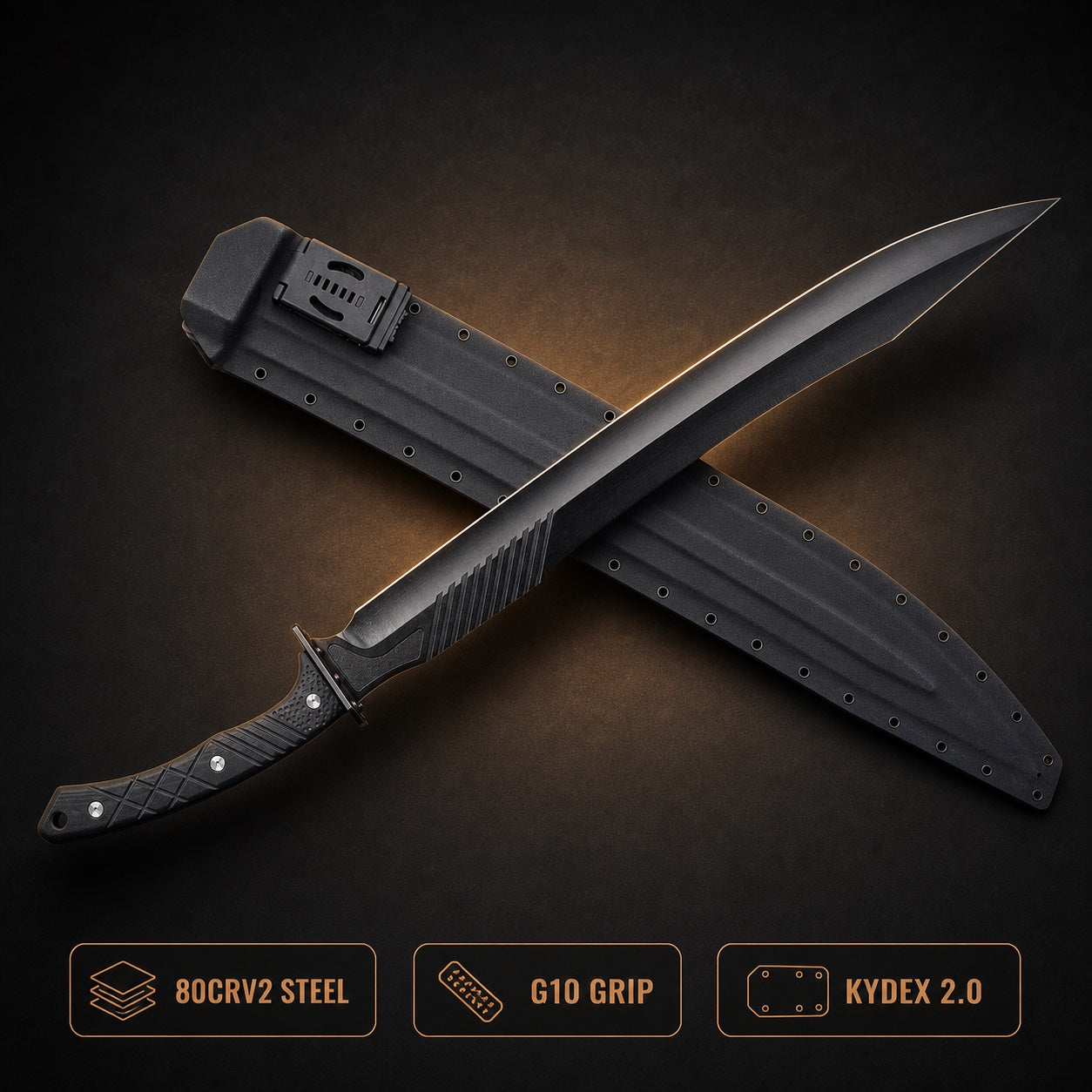
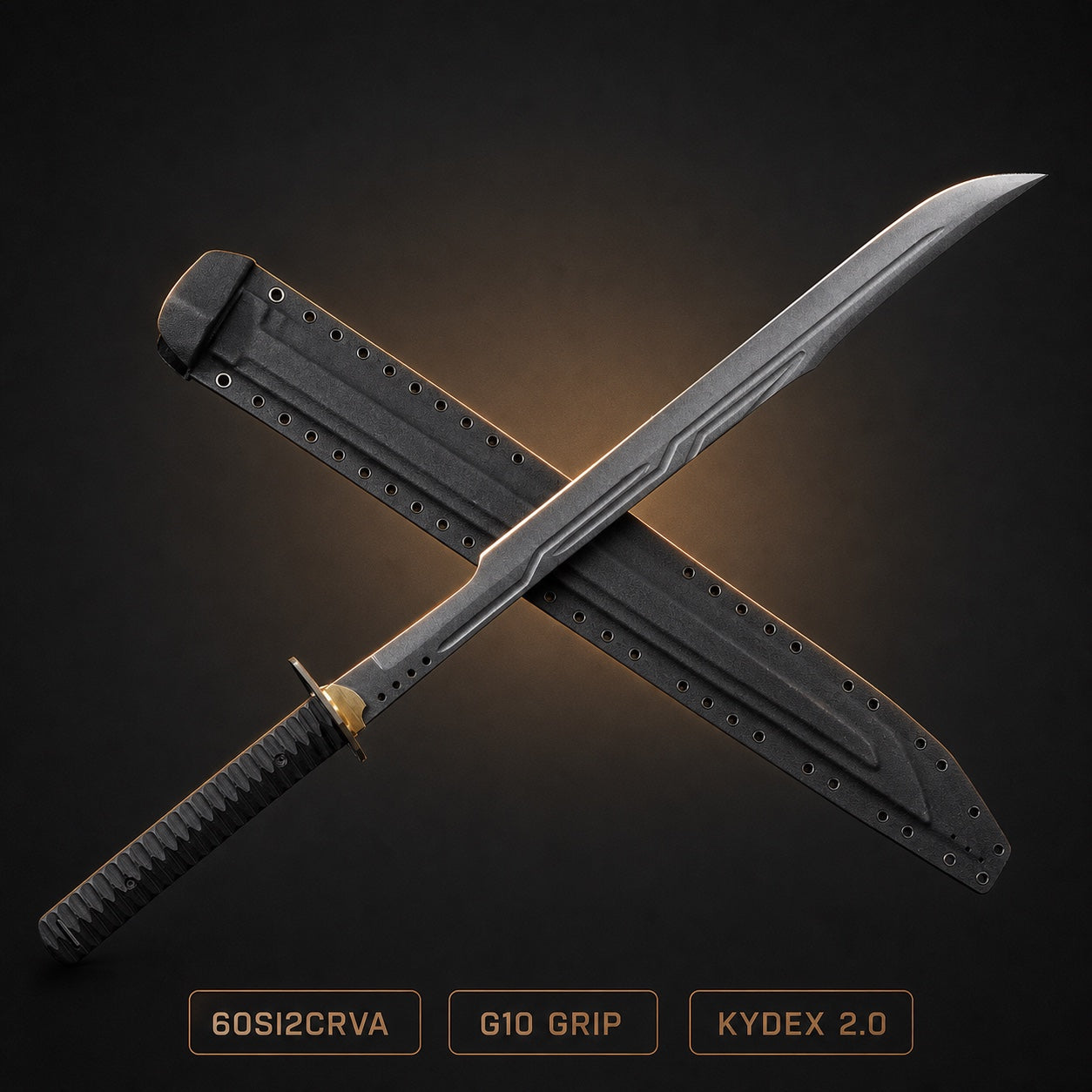
A tactical-style sword usually combines a modern silhouette with materials commonly seen in contemporary outdoor and tool design. Dark blade finishes, textured synthetic grips, exposed fasteners and molded scabbards are common visual cues. The category is broad, so the construction details listed on an individual product page matter more than the label alone.
- Modern styling: black, gray and earth-tone finishes with clean geometric lines.
- Grip materials: G10, polymer, wrapped cord or other weather-resistant materials.
- Scabbards: molded Kydex-style or synthetic systems are common.
- Blade steels: examples may include SK5, 80CrV2, 60Si2Mn, 9SiCr or other carbon and spring steels.
- Collector appeal: contemporary design, compact proportions and distinctive surface finishes.
Explore the full JMSWORD tactical sword collection to compare profiles, steels and scabbard configurations.
What defines a medieval sword?
A medieval-style sword is built around a historical European visual language. Common forms include arming swords, longswords, bastard swords, Viking-inspired swords and larger greatswords. Modern reproductions vary widely: some prioritize historical appearance, while others combine traditional profiles with modern spring steels and decorative finishes.
- Historical silhouette: recognizable crossguards, pommels and straight double-edged blades.
- Traditional fittings: wood, leather, metal and wrapped grip components are common.
- Scabbards: leather-covered or historically inspired scabbards complement the sword’s presentation.
- Blade steels: spring steel, manganese steel, Damascus-patterned steel and other carbon steels may be used.
- Collector appeal: historical atmosphere, display presence and craftsmanship details.
Browse the JMSWORD medieval sword collection for longswords, bastard swords, Viking-inspired pieces and greatswords.
Five differences that matter when choosing
1. Overall design language
Tactical swords look intentionally modern. A piece such as the Black Leviathan 80CrV2 Tactical Sword uses a contemporary profile and dark presentation. Medieval pieces such as the Blackthorn Spring Steel Bastard Sword focus on a recognizable European silhouette and traditional scabbard appearance.
2. Blade finish and maintenance
Some modern coatings can reduce direct exposure of the blade surface, but no finish eliminates maintenance. Uncoated carbon and spring steels develop fingerprints and surface oxidation more readily and should be wiped clean and lightly protected after handling. Patterned or polished blades deserve especially careful storage because small marks are easy to notice.
3. Grip and scabbard materials
Synthetic grips and molded scabbards tend to resist moisture better than leather and wood. Traditional materials offer a warmer, more historical appearance but need a stable, dry environment. When comparing products, check whether the scabbard is included and review the listed material instead of assuming every sword uses the same system.
4. Size and display presence
Tactical swords range from compact short-sword formats to full-length designs. Medieval pieces can vary even more—from one-handed forms to two-handed greatswords. Always compare total length, blade length and weight with your storage or display space. A large sword may look impressive online but require a much wider wall mount or cabinet.
5. Collecting focus
Choose tactical styling if your collection centers on modern industrial design, dark finishes and material innovation. Choose medieval styling if you enjoy historical forms, crossguard and pommel variations, leatherwork or period-inspired display. Many collectors eventually keep both because the categories offer very different visual experiences.
Which category is better for a first purchase?
For a first sword, prioritize clear specifications over category names. Look for a product page that identifies the steel, total length, blade length, weight, grip material, scabbard type and included accessories. Then compare those details against your intended display and maintenance routine.
- Choose a manageable overall length that fits your space.
- Select materials you are prepared to maintain.
- Confirm whether the sword is supplied sharpened or unsharpened.
- Review local laws and carrier restrictions before ordering.
- Keep the sword secured and away from children or unauthorized handling.
Final takeaway
Tactical swords and medieval swords are best understood as two design families rather than competing quality levels. Construction, heat treatment, geometry and assembly determine far more than the category label. Compare the published specifications carefully, choose the style that fits your collection and plan for safe storage from the beginning.
Continue with the JMSWORD Sword Guide, or compare the tactical and medieval collections side by side.